
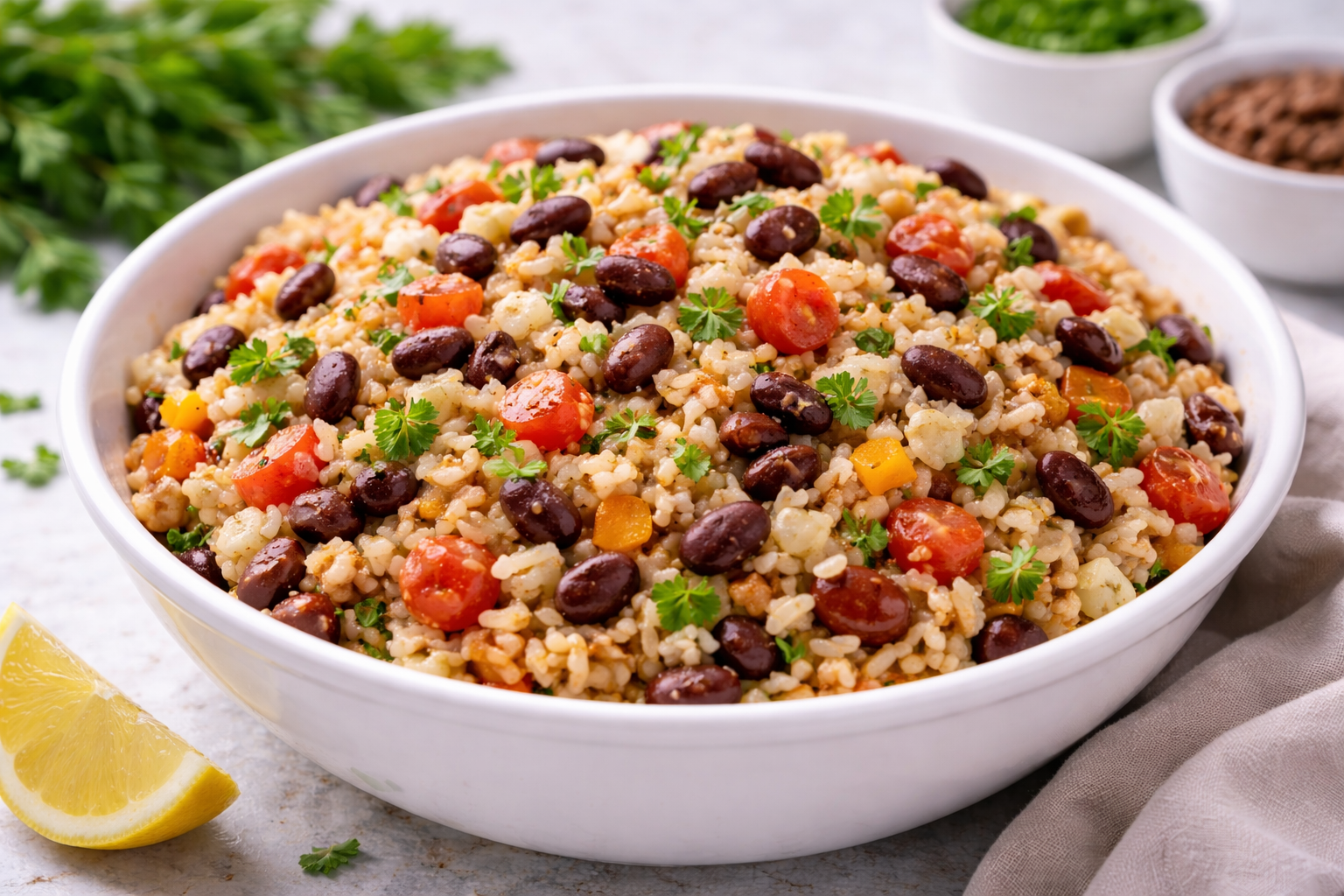
Rice and beans is a widely prepared dish found in many regions of the world. It combines cooked rice with beans to form a complete meal that is simple in structure and flexible in ingredients. The dish is commonly eaten for lunch or dinner and is often considered a staple food in everyday diets. Rice and beans can be prepared using different types of rice and beans, depending on local availability and cooking traditions. The ingredients are usually cooked separately and then combined or served together. Because the preparation does not require complex tools, the dish is frequently included in home cooking routines. In this article, we explain what rice and beans is, describe common ingredients, provide an easy recipe, and outline a short preparation method using clear and simple words suitable for regular kitchens.
What Is Rice and Beans?
Rice and beans is a dish made by pairing cooked rice with cooked beans. The rice is usually boiled or steamed, while the beans are simmered until soft. The two components can be mixed together or served side by side on a plate. This combination appears in many cuisines and is often prepared with basic seasonings. Because beans provide plant protein and rice provides carbohydrates, the dish is commonly described as a plant-based meal in daily food planning.
Common Ingredients Used
Rice and beans can be prepared with a small number of widely available ingredients:
- Rice (white or brown)
- Beans (black beans, kidney beans, pinto beans, or lentils)
- Water
- Salt
- Cooking oil
- Onion or garlic (optional)
These ingredients are suitable for home cooking and are easy to store.
Short Recipe Overview
Below is an easy recipe for basic rice and beans. Quantities can be adjusted depending on serving size.
Ingredients:
- 1 cup rice
- 1 cup cooked beans (or canned beans, drained)
- 2 cups water
- A pinch of salt
- 1 tablespoon oil
Preparing Method (Simple Steps)
For the Rice:
- Rinse the rice with water.
- Add rice and water to a pot.
- Add a pinch of salt.
- Bring to a boil.
- Reduce heat and cook until water is absorbed.
- Remove from heat and set aside.
For the Beans:
- If using canned beans, rinse and drain them.
- If using dry beans, soak and cook them until soft.
- Heat oil in a pan or pot.
- Add beans and a small amount of water if needed.
- Add salt and stir gently.
- Cook for a few minutes until heated through.
Serve the beans with rice or mix them together before serving.
When and How It Is Commonly Served
Rice and beans is commonly eaten as a main meal for lunch or dinner. It may be served alone or with vegetables, sauces, or simple side dishes. Because it keeps well after cooking, it is often included in meal prep routines. The dish can be reheated and served warm.
Variations and Storage
There are many variations of rice and beans. Different spices, herbs, or vegetables may be added depending on regional traditions. Some versions include additional ingredients such as tomatoes or peppers. Cooked rice and beans can be stored in the refrigerator for several days. They are often stored separately to maintain texture. Due to its structure, rice and beans is commonly listed among plant-based meals and dishes that use beans as a protein source.
Rice and beans is a simple and widely prepared dish that combines cooked rice with beans. As a staple food, it is commonly included in home cooking and daily meal routines in many regions. The dish follows a clear preparation process that involves cooking rice and beans separately and serving them together. Rice and beans is often categorized as a plant-based meal and a protein source due to the role of beans in the dish. It is also frequently included in meal prep planning because it can be prepared in larger portions and stored for later use. Overall, rice and beans remains a common meal choice because of its straightforward preparation, basic ingredients, and suitability for everyday meals.
View more Food for lunch through the links: Pasta with Tomato Sauce, Pasta with Vegetables.
View more Meals through the links: Food for Breakfast, Food for Dinner.